Every evening starts the same way: you ask, your child stalls, you ask again, the violin comes out reluctantly, and ten minutes in someone is in tears. Sometimes both of you. If you are searching for "my child hates practicing music," you are not alone — and the cause is almost never that your child secretly hates music. It is something more specific, more fixable, and almost always related to how the practice is structured, how the parent is involved, or what the room around the instrument feels like.
The Reasons Have Less to Do With Music Than You Think
Children rarely hate music. They hate the experience of practicing, which is a different thing. The pedagogical research is consistent on this: when practice becomes a "daily fight," the cause is almost never the music itself. It is the dynamics around it. [1]
The most common causes are mundane: the routine has become a power struggle, the child does not actually know how to practice, the practice environment is wrong, or the child is being asked to do something that is currently too hard with no clear path to it being easier. Each of these has a different fix, and treating all of them as "lack of motivation" tends to make every one of them worse.
Before diagnosing your specific situation, accept one premise: your child wanting to stop practicing today does not mean they want to quit music. Conflating those two things is how a fixable practice problem becomes a permanent decision to stop playing.
Parental Pressure: The Most Common (and Hidden) Cause
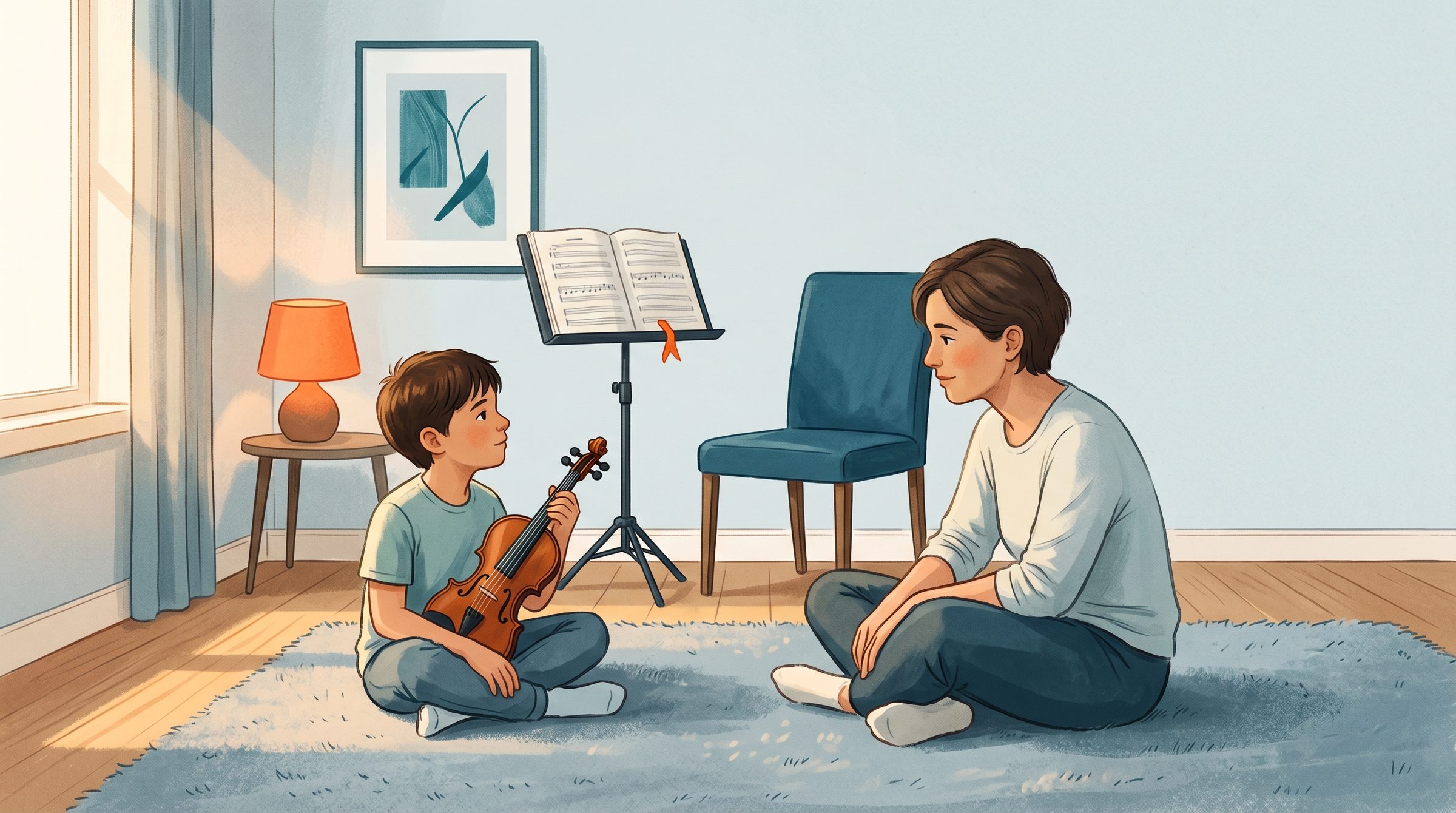
The Musicologie parenting guide describes two parental modes: the partner and the policeman. The partner sets up the routine, takes notes from the teacher, and stays calm during difficult moments. The policeman enforces, corrects, monitors, and treats the practice as something the child owes. Most parents believe they are being a partner. Many of them, from the child's perspective, are being a policeman. [2]
The signs of policeman mode are subtle — a tone that gets a little tighter when reminders happen, a frown at a missed note, a comment about the time the practice is taking. None of these feel aggressive to the parent. All of them register to the child. Over weeks, the child stops associating the instrument with music and starts associating it with the parent's anxiety.
The NPR reporting on Suzuki teachers makes the same point in stronger terms: the moment practice becomes about making the child play, the relationship is in trouble, even if the child still goes through the motions. Protecting the child's long-term interest in music sometimes requires the parent to step back, even if it means a less productive session today. [1]
A useful self-test: if you removed yourself from the room entirely for one week — no reminders, no corrections, no presence — would your child still practice at all? If the honest answer is no, the practice has been running on parental pressure rather than on the child's own engagement, and the underlying problem is not laziness. It is that the routine never really belonged to the child.
Frustration vs. Boredom: Two Different Problems, Two Different Fixes
Children resist practice for two very different reasons that often look identical from the outside.
Frustration sounds like: "I can't do it," tears at the same passage every day, the instrument being put down and picked up repeatedly without progress. Frustrated children are working at something that is too hard, with no visible bridge to it being easier. The fix is structural — break the passage into smaller pieces, slow it down, and end the session on something the child can play well. Both the Suzuki tradition and Kinga Krupa's parent guide call this "easy steps": shrinking the task until success is achievable, then expanding from there. [3]
Boredom sounds like: sighing, going through the motions, finishing the run-through and immediately stopping, no engagement with the music. Bored children are usually under-challenged, stuck on a piece that has been "almost done" for too long, or playing repertoire that does not interest them. The fix is musical — talk to the teacher about a new piece, varying the warm-up, or letting the child pick one piece per term that they actually want to learn.
Treating frustration like boredom (more variety!) makes it worse — the child still cannot play the difficult thing, just now with a longer list. Treating boredom like frustration (slowing down, breaking it up) makes it worse too — the child becomes more bored, more slowly. The fix has to match the cause.
The Environment Is Often the Real Issue
Elizabeth Leehey's writing on practice environments highlights a cause most parents underestimate: the physical and psychological space around the instrument. [4]
A practice space where the child feels watched, judged, or interrupted will produce resistance regardless of routine. The same is true for spaces that are visually distracting, near siblings playing video games, or in the middle of household traffic. Practice asks for concentration; concentration requires a space that allows it.
A few environment fixes that frequently shift things on their own:
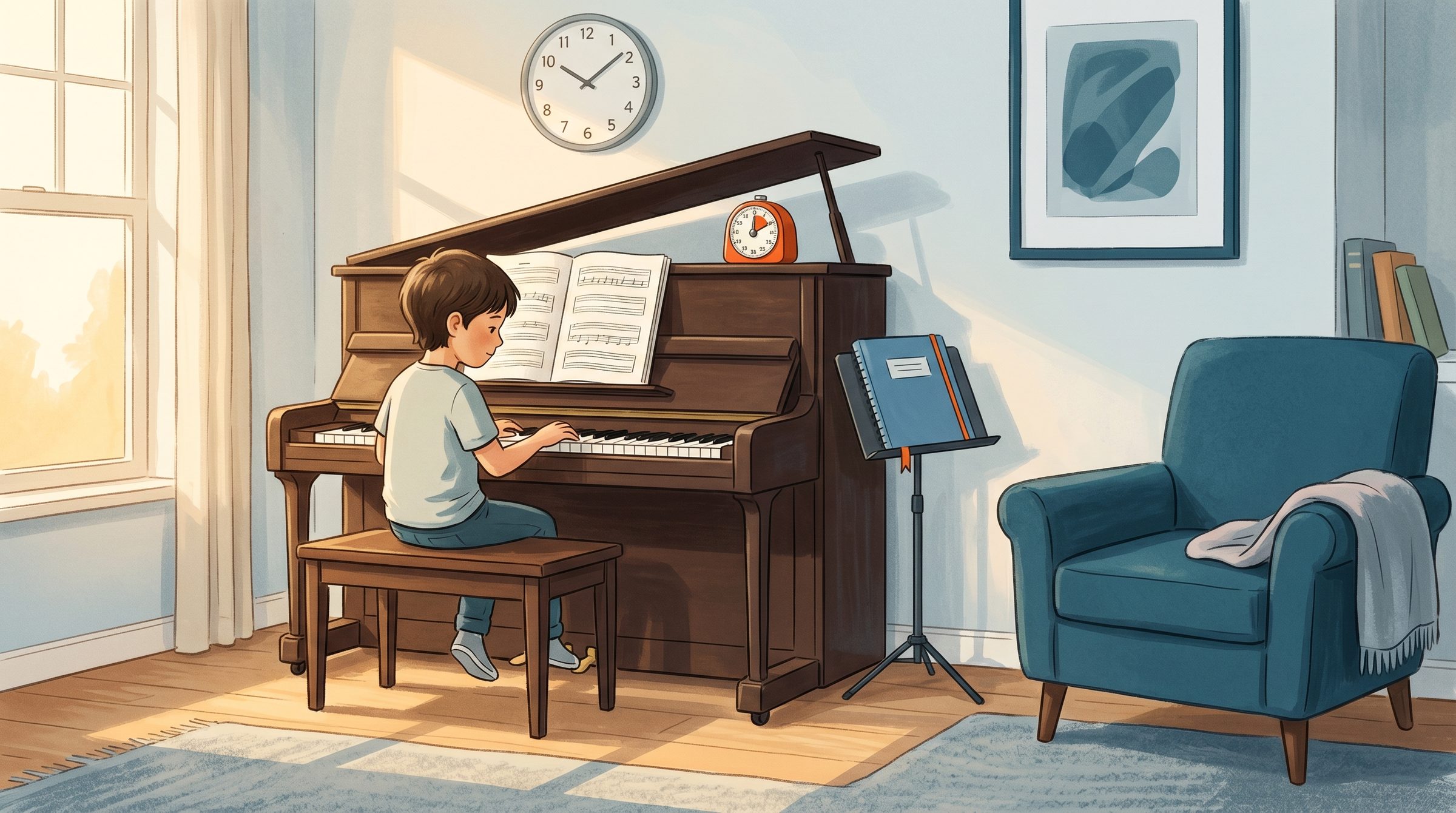
- A consistent corner with a music stand and good light, away from screens and high-traffic areas
- The instrument out and ready to play — not requiring the child to assemble it before they can start
- A predictable time, so practice is not negotiated daily
- Privacy from siblings during the actual practice session
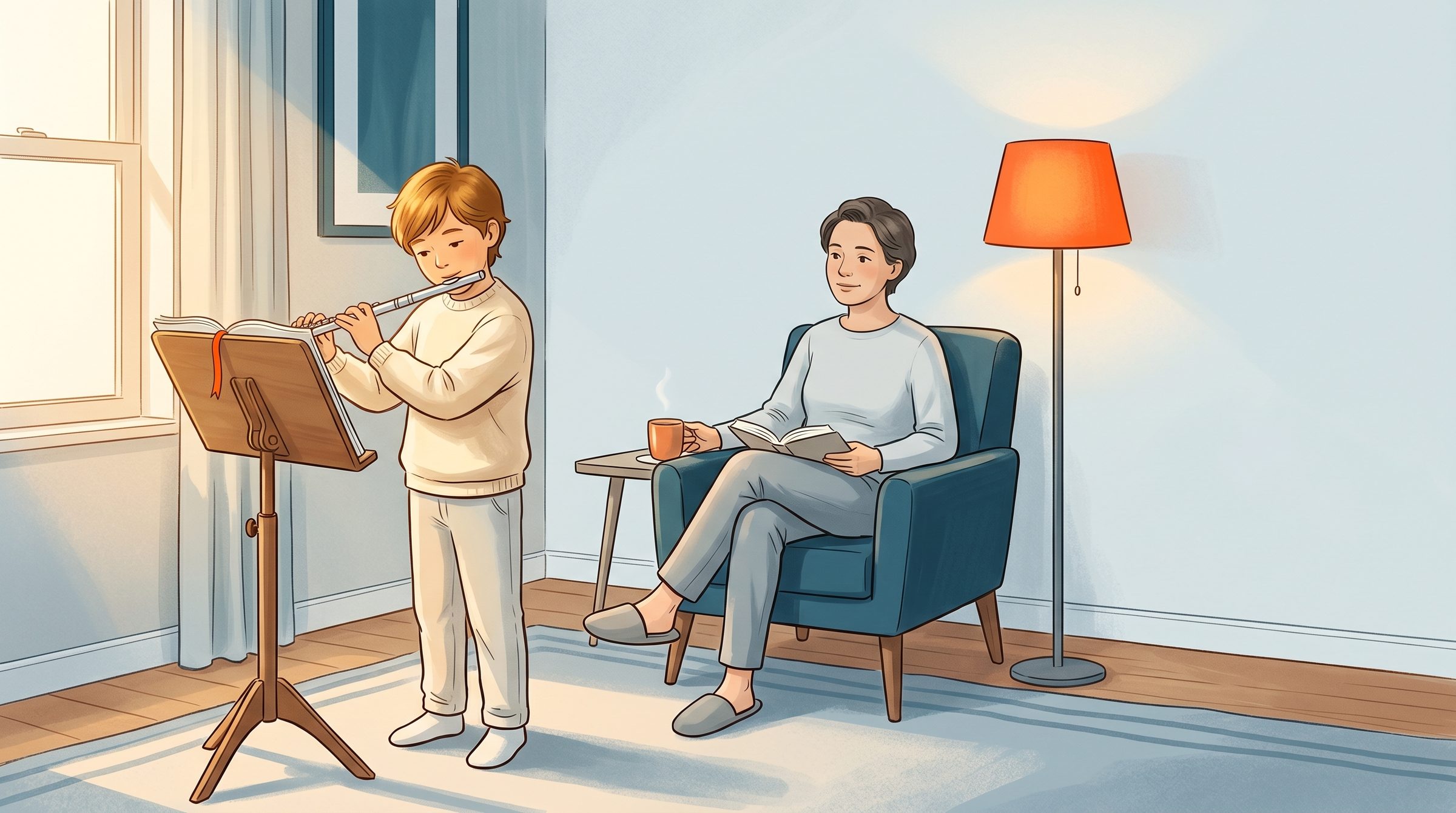
- The parent within earshot but not in the same room (so the child has space to make mistakes without an audience)
Sometimes a child who hates practicing simply hates the room it happens in, and changing the corner of the house changes the relationship with the instrument.
How to Reset a Practice Routine That Has Become a Daily Fight
If practice has been a fight for weeks rather than days, the routine itself probably needs a reset rather than a gentle nudge. The pedagogical consensus across the parent-focused sources is to back off, shrink the task, and rebuild positive associations before adding pressure back in.
A reset that works for many families:
- Stop the daily fight for one week. Remove the requirement entirely. Let the instrument sit available but not required.
- Talk to the teacher. Share what you have observed without diagnosis: "Bar 12 has been a battle every day, and the last three sessions ended in tears."
- Restart with one small thing. Five minutes a day of a piece the child genuinely likes. Just five minutes. Just liking it. Not perfect.
- Hold that pattern for two weeks before adding back duration or harder material. The Suzuki tradition and Violinist.com tips both emphasize ending sessions on success — that is the bedrock you are rebuilding. [6]
- Then expand gradually. Add a warm-up. Add the harder piece, but only to the point of engagement, never to the point of meltdown.
If you have been running this kind of dynamic for months, it is worth reading how to help your child practice music for the deeper framework on parent role and practice routine.
When It's a Phase — and When It's a Real Signal
Most practice resistance is a phase. Children go through periods of resistance to almost everything they otherwise enjoy — sport practice, homework, brushing teeth — and music is no exception. A few weeks of low engagement after a difficult piece, a hard period at school, or simply growth-spurt fatigue is not a sign that the child should quit.
A few patterns are different. The Suzuki teachers interviewed by NPR identify a deeper signal when emotional breakdowns persist despite attempts to reframe — when the child has stopped associating the instrument with anything good at all. [5]
Worth taking seriously:
- Tears or shutdowns at the start of every session for more than three weeks, despite changes to routine and structure
- The child asking to quit repeatedly across months, not in single bad-day moments
- Loss of any positive engagement with the instrument (no spontaneous playing, no curiosity about pieces, no pride after performances)
- Pain, posture issues, or physical symptoms the child is associating with the instrument
If those patterns are present, the conversation with the teacher needs to be a real one — about whether to change repertoire, change pace, take a break, switch instruments, or, sometimes, stop. None of those are failures. All of them are better than forcing through a relationship with music that has already broken.
For most families, the answer is far less dramatic. The fight is real, the cause is fixable, and the child still loves music underneath. What needs to change is usually the routine, the room, or the role the parent is playing — not the child's relationship to the instrument.
One often-overlooked piece of the fix is making progress visible. Many practice fights happen because the child cannot see anything getting better — the same passage feels just as hard week after week, even when it is gradually improving. Tools like AIMU listen to each session and produce visual reports of which notes and passages are improving, which gives both the parent and the child something concrete to point at on a hard day. "Look — this passage was red last week and it's mostly green today" is sometimes the only thing that turns the routine around.
Further reading
- Getting Kids to Practice Music Without Tears or Tantrums (NPR / Deceptive Cadence)
- How to Practice: A Guide for Parents and Caregivers (Musicologie)
- 5 Easy Steps to Help Your Child Practice at Home (Kinga Krupa)
- Creating an Optimal Music Practice Environment for Your Child (Elizabeth Leehey)
- Eight Helpful Tips to Help Your Child Practice at Home (Suzuki Music Institute)
- Practice Tips for Parents (Laurie Niles, Violinist.com)