You sit down with your violin, you play through your piece a couple of times, you call it practice. Forty-five minutes later, the hard passage is still hard, and you have no idea what got better. The problem is rarely how much you practice — it is what you do during the time you practice. These ten music practice tips for students are grounded in actual deliberate-practice research, not the generic "practice every day!" advice that fills most blog posts. Some of them will feel slower. Some will feel boring. All of them work.
Plan Your Session Before You Start
The single biggest difference between productive practice and time wasted is whether you decide what you're going to work on before you pick up the instrument. The first three tips are about deciding.
1. Start With a Plan, Not a Piece
Before you play a single note, write down what you want to fix today. One specific thing, not "the piece." Something like "the rhythm in bar 12" or "the shift in the second line." Without a target, your brain defaults to playing the piece from the top — which is the least productive thing you can do. Ericsson describes deliberate practice as work toward specific goals, often set by a teacher; without them, you are just playing. [1]
2. Warm Up Before Diving Into Repertoire
Five minutes of long tones, scales, or whatever your teacher gave you. Not because warm-ups are a moral obligation, but because cold muscles and cold attention produce sloppy first attempts that you then accidentally reinforce. The warm-up is also a chance to listen to your own sound before any pressure of repertoire kicks in.
3. Set Specific Goals for Each Session
"Get better" is not a goal. "Play bars 9 to 16 at quarter = 80 with the right rhythm" is a goal. In Palese & Duke's study, players compared what they intended with a recording of what they played and named the mismatches. The school-aged players then seldom paused and often worked on something other than the problems they had just named. A specific, written target keeps you on the problem you found. [2]
Practice the Right Things, Not Everything
Most students spend way too much practice time on things they can already play. The next three tips fix that.
4. Practice the Hard Parts First
When you start with the easy section, you spend your best concentration on stuff that already works. Then by the time you reach the hard part, you are tired and your attention is degraded — exactly when you need it most. Reverse the order: hard parts when you are fresh, easy parts as a reward at the end.
5. Slow Down to Speed Up
Repetition does not sort good attempts from bad ones. If you practice a passage at full speed with three errors, you are likely rehearsing the errors. Slowing down enough that you can play it cleanly — even at half tempo — is how the correct pattern gets into your muscle memory. Speed is then added back gradually with the metronome.
6. Break Long Pieces Into Small Sections
A whole piece is too much information for your brain to fix at once. Three difficult bars, isolated and looped, get your full attention on every repetition. Buried inside a forty-bar piece played from the top, they get a few seconds per run-through. Ericsson describes deliberate practice as correcting one specific weakness at a time while keeping the rest intact, and notes that skaters spent much of their practice on jumps they had already mastered. [1]
Use Tools That Make Practice Honest
You think you are playing in time. You think your tone sounds good. You are usually wrong, in ways you cannot hear in the moment. Two tools fix this.
7. Use a Metronome (Even When It Feels Boring)
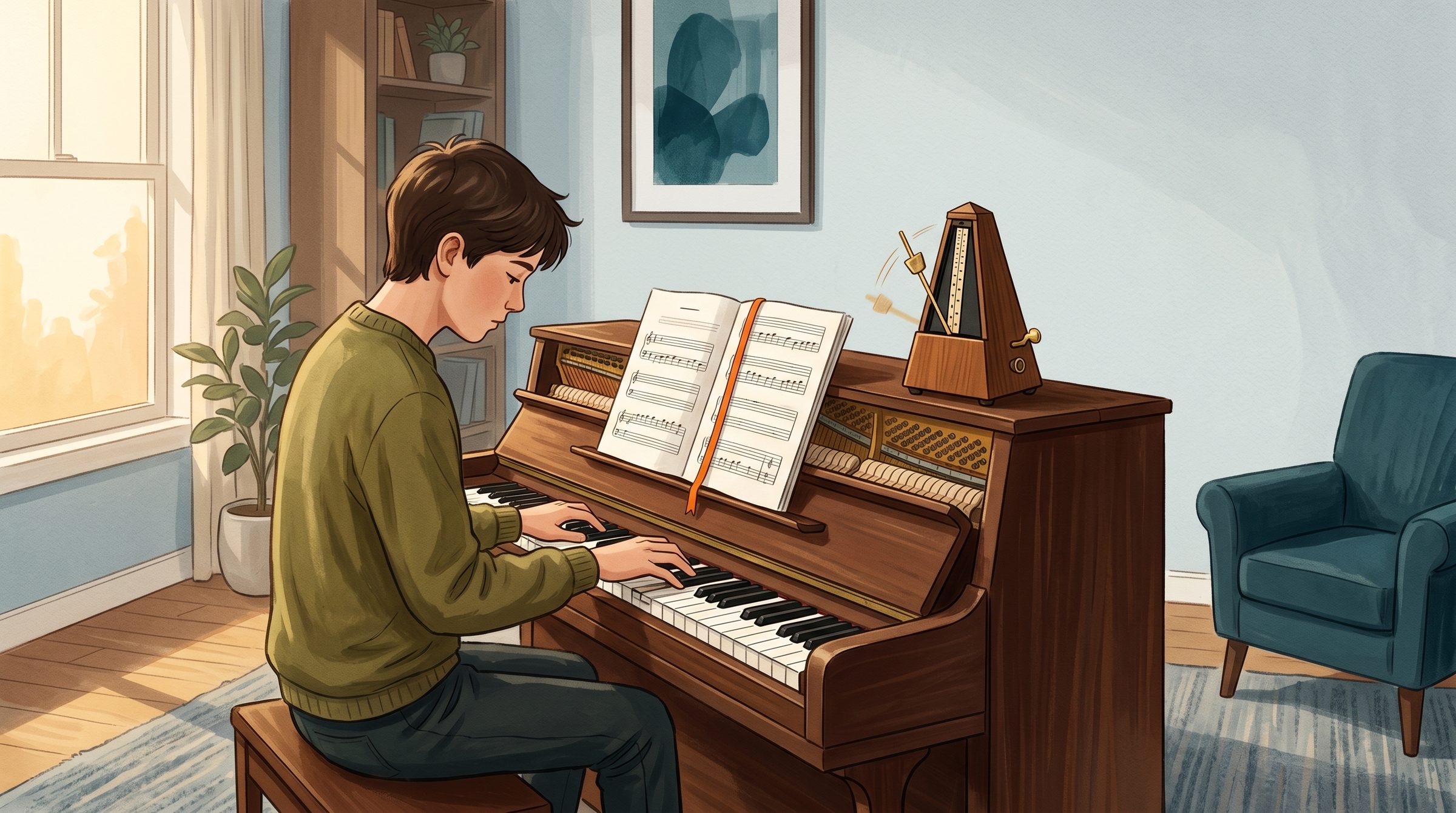
A metronome is not for keeping time — it is for revealing the places where you are not keeping time. The notes you rush, the rests you cut short, the holds you don't actually hold. If a passage feels fine without a metronome and falls apart with one, the metronome was not the problem.
8. Record Yourself and Listen Back
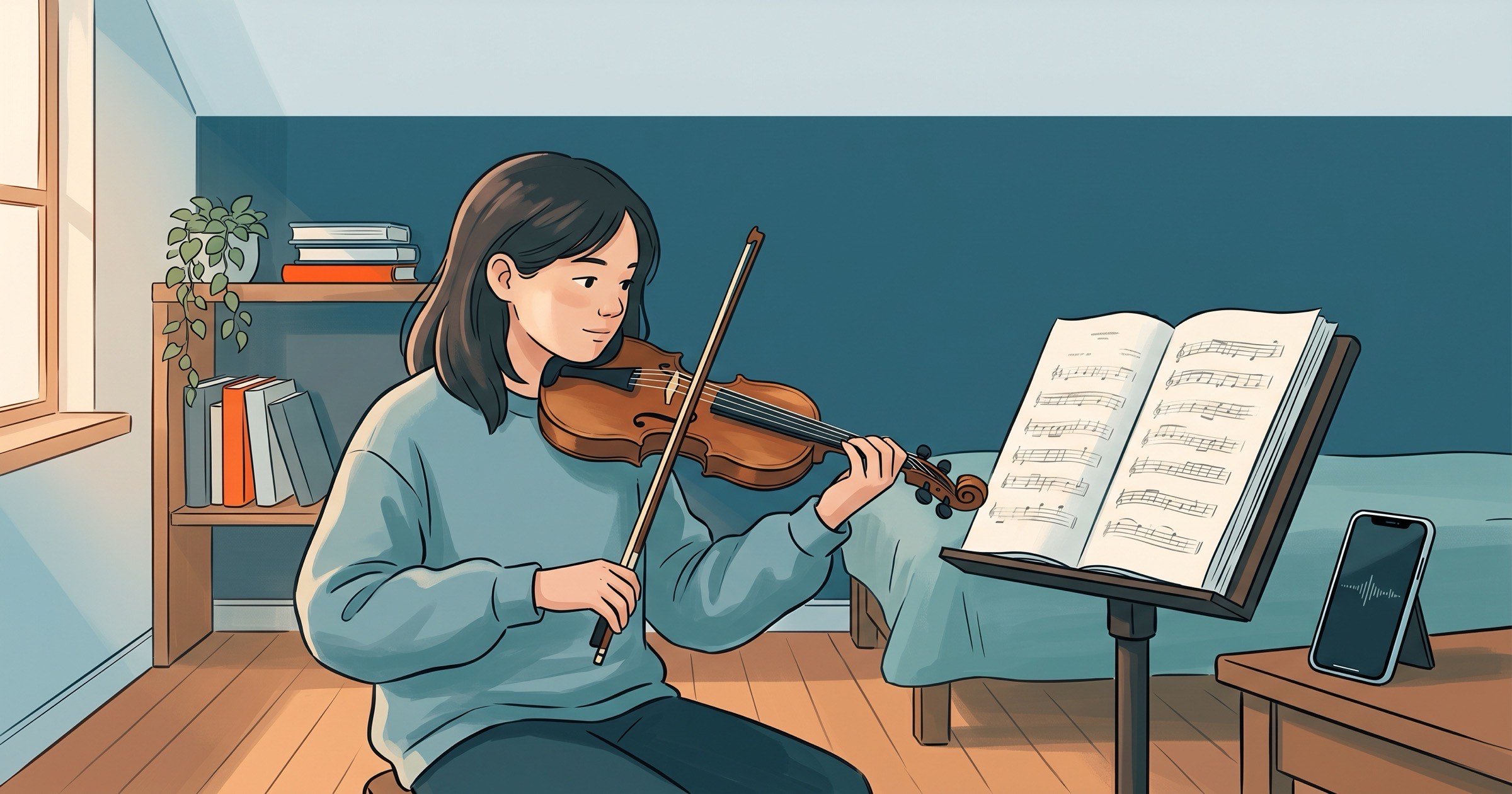
Recording is the cheapest way to get the experience of having a teacher present without one. Your phone voice memo is fine — it is not the audio fidelity that matters. The first time you listen back to yourself, you will hear things you swear you did not play. That is not the recording lying. That is your real-time monitoring missing things, which is exactly the gap deliberate practice is meant to close.
Notice What's Working and What Isn't
You will not improve every day. You can still tell whether the trend is up. The last two tips are about reading the trend and respecting your own limits.
9. Track Your Progress Over Time
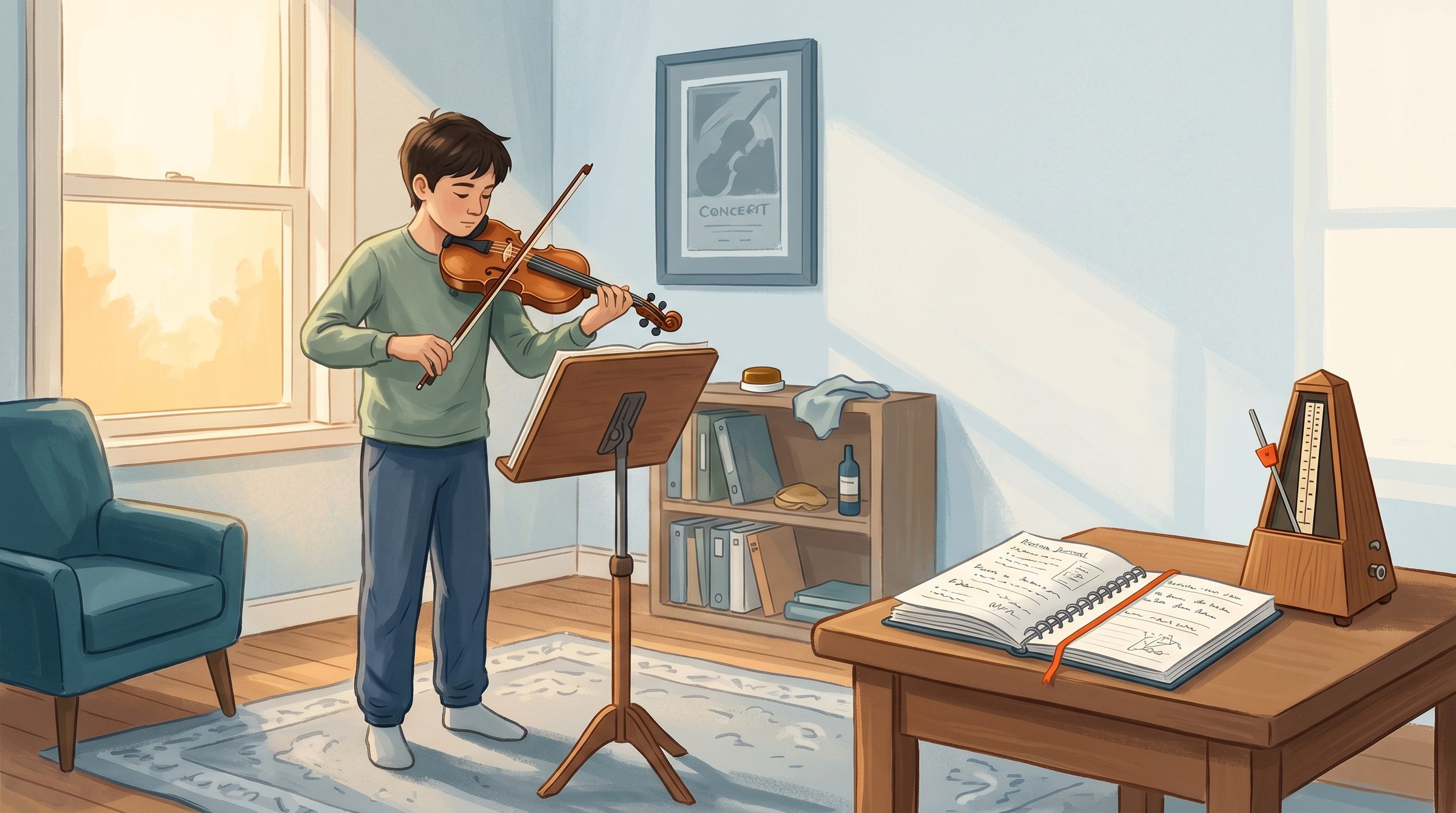
A tiny practice journal — three lines after each session, "what I worked on / what got better / what's still hard" — is enough. Reading back over a month is what reveals whether you are actually progressing or just spinning. The journal is also what helps your teacher when you bring it to a lesson and can say specifically what was difficult.
10. Know When to Stop
Practice quality drops sharply once your attention fades. After that point, you are mostly just reinforcing whatever you happen to play, which is why some sessions leave a passage worse than when you started. Ericsson's review notes that deliberate practice demands concentration you can sustain only for limited periods, and that expert performers practice without rest for only around an hour. [1] For most students, we find twenty to forty focused minutes beat sixty unfocused ones.
If you are practicing alone at home and want a deeper structure for the session itself, how to practice music at home covers the full session shape end-to-end. If a specific passage has been slow for weeks, how to practice slowly goes deeper on tip #5. And if you want to memorize the piece for performance, how to memorize music covers the actual research on what works.
The thread connecting all ten tips: practice is a structured activity, not just time spent with the instrument. A tool like AIMU listens to each session and produces visual reports of which passages are improving and which need attention — which makes tip #9 (tracking progress) easier when you cannot always tell on your own. None of the tips require an app. All of them get easier when the gap between what you played and what you intended is honestly visible.
If you remember nothing else from this list, remember the three tips that produce most of the difference. Tip #1 — start with a plan — because it determines whether the next thirty minutes are practice or just playing. Tip #5 — slow down to speed up — because most "practice" at full speed is just rehearsing your mistakes. And tip #10 — know when to stop — because tired practice tends to undo the work the rest of the session did.
The students who improve fastest aren't the ones who practice most. They are the ones whose practice is structured, focused, and honest about what is and isn't working. The ten tips above are not new ideas. They are the same ideas serious teachers have been telling their students for fifty years, and deliberate-practice research points the same way: how you practice matters more than how long you do it.
Further reading
- The Influence of Experience and Deliberate Practice on the Development of Superior Expert Performance (Ericsson, 2006, Cambridge Handbook of Expertise, ch. 38)
- Thinking Time in Music Practice (Palese & Duke, 2022)
- Effects of Practice Schedule on Wind Instrument Performance: A Preliminary Application of a Motor Learning Principle (Stambaugh & Demorest, 2010)
- Deliberate Practice and Performance in Music, Games, Sports, Education, and Professions: A Meta-Analysis (Macnamara, Hambrick & Oswald, 2014)
- Maintaining Excellence: Deliberate Practice and Elite Performance in Young and Older Pianists (Krampe & Ericsson, 1996)